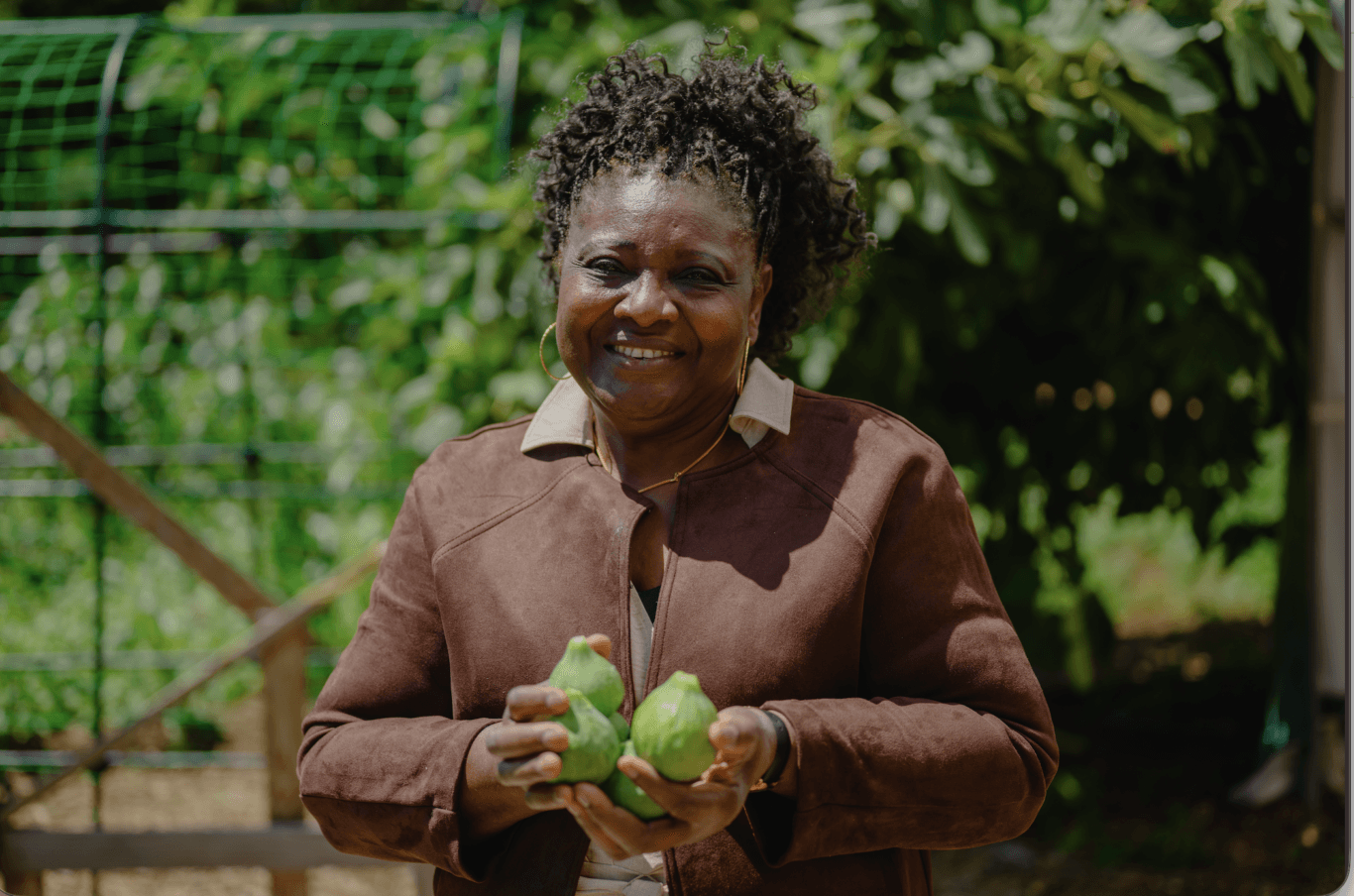

Dr. Roseline Yunusa Vakkai, Founder, De Rose Community BridgeMy pain, trauma and life experience led me to officially start this nonprofit, she says. When you have lived through hunger, you understand that food is not charity. It is the foundation.
Hunger Is Shaped by Systems. How one Portland Community is Responding.
Hunger Is Shaped by Systems. How one Portland Community is Responding.
At 5:30 a.m. every Saturday, people are already waiting outside De Rose Community Bridge near 99th and East Burnside in Portland.
They come early because they need to. Each week, 200 to 300 people rely on this site to feed their households. For many families, these groceries are the difference between having food and going without.
The nonprofit she founded in 2018 operates out of a modest house and yard. Volunteers unload pallets of produce and sort donations. People take a number and wait their turn, sitting in chairs, speaking in different languages while their children play nearby. In winter, propane heaters cut the cold. From a small kitchen, trays of mandazi, coffee and cooked meals are handed out alongside boxes of groceries.
This is what hunger looks like in Oregon right now. Last year, the Oregon Food Bank Network supported 2.9 million visits to food assistance sites across the region. Rising rents, low wages and long-standing inequities continue to push families to the edge.
A community-led response to hunger in Portland
For Rose, this work is personal.
Many of the people who gather here are immigrants and refugees. Some are experiencing houselessness. Many are navigating housing instability and low wages. Rose understands those realities because she has lived them.
When her marriage ended, she lost her stability and lived in her car for six months while seeking custody of her children. Providing food became uncertain.
"When you are counting every meal, when you are stretching rice so your children can eat, it changes you. You never forget that feeling."
She later came to the United States as an international graduate student, earning both a master’s degree and a PhD in human development. Despite her education, she experienced isolation and underemployment.
In 2016 , she moved to Portland after her daughter was admitted to a university. A job she had arranged fell through, and she stayed in a shelter.
“God always puts you on the path where you belong,” she says.
Those experiences shaped how she understands hunger. Hunger is not simply the absence of food. It is unstable work. Unstable Housing. Systems and policy choices that make hunger possible.
When she founded De Rose Community Bridge, she did not yet know its full purpose.


From lived experience to community leadership
That changed during the COVID-19 pandemic.
Calls began coming in from families who were sick, quarantined or unable to access food.
“I thought to myself, I have a car. I must take responsibility,” Rose says.
She began cooking late into the night and delivering meals early in the morning. She started with about 100 boxes a day. The number quickly doubled.
“We never stopped,” she says. “The need never stopped.”
What began as an emergency response became sustained community infrastructure.


Building food access for families and neighbors
Today, De Rose Community Bridge operates a weekly food distribution and a daily meal service for people experiencing houselessness. Rose and her staffers prepare roughly 250 boxed meals each day, six days a week.
“The houseless people are part of the reason I wake up every day,” she says. “I want to be there for them.”
“We want to be a bridge,” she says, “helping people get where they want to be.”


Strengthening community food distribution through partnership
In 2025, that community-rooted leadership became part of Oregon Food Bank’s Pathway to Partnership program, a three-year initiative designed to strengthen community-led food distribution and long-term sustainability.
The program provides technical assistance and financial support to organizations led by people with lived experience of hunger. In its first year, the initiative helps sites meet the requirements to become official partner agencies within the Oregon Food Bank Network, gaining consistent access to wholesale and free food delivered through Oregon Food Bank’s distribution system.
For Rose, that shift is significant. Instead of spending hours each week driving across the region to collect donations and manage an unpredictable supply chain, she would gain consistent access to food delivered through Oregon Food Bank’s network.
“Becoming a partner agency would save us 15 to 20 hours in driving time alone,” Rose says.


Those reclaimed hours mean more time serving families and less time chasing supply.
Pathway to Partnership is designed to do more than streamline distribution. It strengthens community-led organizations so they can build stable funding, consistent supply chains and long-term capacity.
Devin Dinihanian, community organizer at Oregon Food Bank, sees Rose’s leadership as central to the partnership.
“She is a multifaceted leader,” Dinihanian says. “Her distribution center is a community center. There’s a lot going on.”
“She already has multiple programs running, a board, a treasurer and a grant writer,” he adds. “That makes a huge difference in sustainability.”
Through sustained partnership, Oregon Food Bank provides nourishing food today while building community power to eliminate hunger and its root causes for good.
"I am not the hero,” Rose says. “We are all just people serving one another."
The goal is not recognition. It is ending hunger. That is not the work of one person. It requires communities building power, partnerships creating stability and systems that ensure food is not a privilege but a guarantee.

Related posts

Community Voices
Ready to Respond: Columbia Gorge Food Bank on the front lines of Rowena Fire relief

Community Voices
April 2026 Community Cultivator: OnPoint Community Credit Union

Community Voices