

News
The State of Hunger in Oregon | Hunger Facts
The State of Hunger in Oregon | Hunger Facts
THE STATE OF HUNGER IN OREGON
Learn more and get involved at OregonFoodBank.org
Hunger in Oregon is at record levels. Rising costs, unequal rules and policy decisions are pushing more families into food insecurity across Oregon and Southwest Washington. Here are the key facts behind the crisis — and what it will take to end hunger for good.
Hunger Fact #1
In just two years, visits to the Oregon Food Bank Network rose 51%, reaching a record 2.9 million visits last year. The rising costs of food, rent, and housing continue to put pressure on families across Oregon and Southwest Washington. Two years ago, visits jumped 31%, and last year rose another 15%, driving this historic increase in need.
Hunger Fact #2
The Oregon Food Bank Network distributed over 98 million meals last year. The Network is made up of 21 regional food banks partnering with more than 1,200 free food markets, pantries, meal sites, and delivery programs. Together, we sourced and distributed 117 million pounds of food, prioritizing fresh produce, dairy, protein and pantry staples. Many locations are shopping-style markets that allow families to select food that matches cultural and dietary needs.
Hunger Fact #3
Today, 1 in 6 people and 1 in 5 kids in Oregon and Southwest Washington face food insecurity, from Ontario to Portland to Clark County. Hunger isn’t just about individual choices — it happens because of policies and systems that make it harder for some people to get by. Too many of us are just one unexpected cost — health care, rent or childcare — away from falling into food insecurity. We are in an ongoing hunger crisis and it is not slowing down.
Hunger Fact #4
Food insecurity in Oregon and Southwest Washington is deeply unequal. Economic and historic policies have made it two to three times more likely for Black, Indigenous and Communities of Color, immigrants and refugees, single moms and caregivers, and trans and gender expansive communities to face hunger and poverty. Poverty, housing costs, healthcare costs and barriers to safety-net access all combine to make food insecurity more likely for some of our neighbors. At Oregon Food Bank, we believe food justice means everyone has a right to nourishing food, no matter where we come from or what we look like.
Hunger Fact #5
3,500+ people took action last year to advance anti-hunger policy and systems change. We can’t end hunger with food alone. Hunger is tied to other issues like poverty, low wages, unaffordable housing and healthcare. We can create real change through advocacy and organizing. Because hunger is a policy choice.
Advocacy means working to change laws and policies for a better future.
Organizing means coming together to create change in our communities.
Hunger Fact #6
Seventy-seven percent of Oregon Food Bank staff have lived experience of hunger and its root causes. Our work is guided by people who know hunger firsthand. Community leadership takes many forms, from shaping local programs to influencing policy decisions. For example, our Policy Leadership Council, made up of community leaders from across Oregon, helps guide which policies we focus on. This ensures the people most affected are at the center of creating lasting solutions.
Hunger Fact #7
Climate change and related natural disasters make food insecurity worse. Wildfires, flooding and ice storms regularly force thousands of our neighbors to leave their homes, shelter in place or lose access to safe food or water. The impacts are often felt long after. As part of Oregon’s statewide disaster response, the Oregon Food Bank Network is always ready to respond with water, food and other critical supplies whenever and wherever they’re needed.
Hunger Fact #8
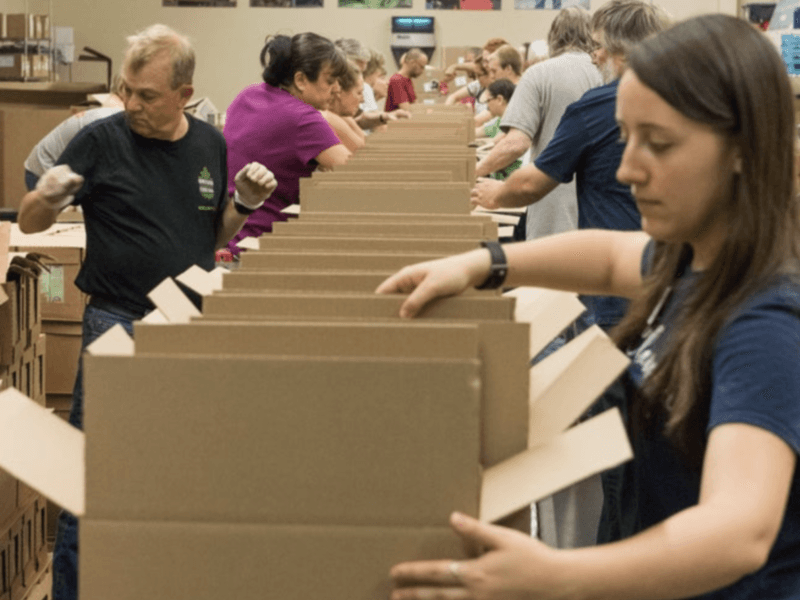
In Oregon, SNAP provides seven meals for every one meal the Oregon Food Bank Network provides, making it the most effective anti-hunger program we have. While food banks stretch dollars much further than any of us can as individual shoppers, strong policy decisions are what keep SNAP and other safety net programs accessible and working for all of us. Working with local farmers, ranchers, manufacturers and grocers, the Oregon Food Bank Network distributes food by the truckload, supported by 15,400+ volunteers who gave 92,500+ hours last year.
Hunger Fact #9
Last year nearly 31,000 donors gave to help end hunger — with the most common gift of $25 given over 19,000 times. The Oregon Food Bank Network distributes food to over 1,200 food assistance programs throughout Oregon and Southwest Washington; donations stay local to help end hunger and its root causes in the communities we serve.
Hunger Fact #10
There is enough food for everyone; people go hungry because of policy choices, not scarcity. Food justice means recognizing food as a basic human right and understanding that hunger is a policy choice. It’s about giving communities the power to decide how we grow, produce, share and eat food. At Oregon Food Bank, we center food justice by focusing on equity, decolonization and systemic change. Our network can serve everyone in line at a meal site or pantry today — but if we don’t address big issues like unaffordable housing, low wages, health care costs and barriers to SNAP those lines will still be there tomorrow. That’s why we’re committed to tackling the root causes of hunger through statewide action. If we rethink hunger together, we can ensure everyone has enough to eat today and end hunger for good… because no one should be hungry.
If you or someone you know needs food assistance, know that help is available and that all are welcome — no proof of gender identity or immigration status is ever required. Visit OregonFoodFinder.org to find free food markets, pantries and meal sites near you, available in 19 languages.
Related posts
News
Wildfire Response and Resources

News