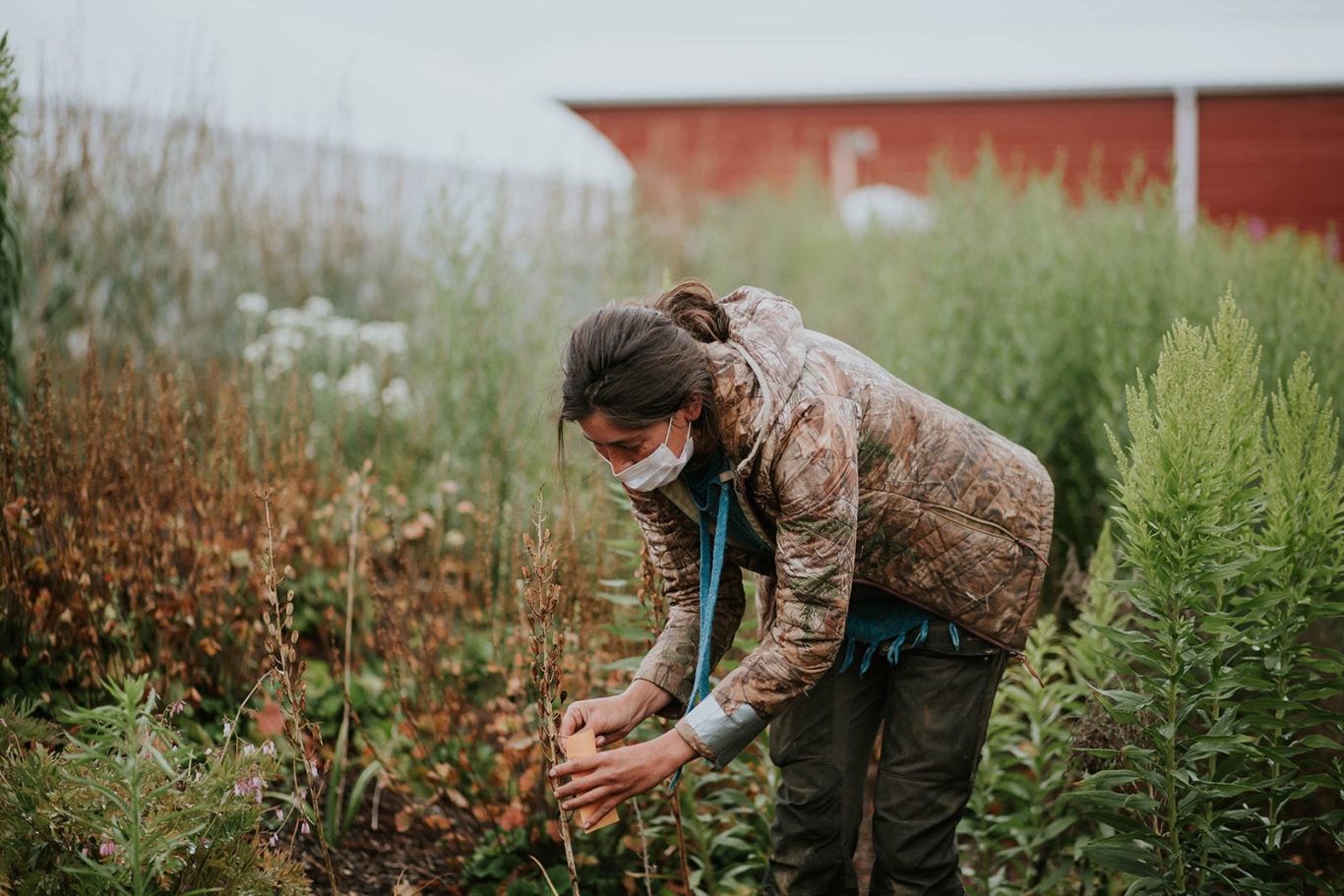

Michelle WeekThe Community Producer Support Fund has helped expand my farm through investment in our community and feeding our community as well as investments into time-saving and body-saving, more ergonomic-friendly equipment to help weed, harvest and cultivate the land. It frees up other money we do make on the farm to funnel towards and focus on accessing land.
Why supporting small-scale producers matters more than ever
Why supporting small-scale producers matters more than ever
Michelle Week's Good Rain Farm - Community Producer Support. To view captions in English, click on the CC/subtitles section and select English.
By Chastity Haxton
Why supporting small-scale producers matters more than ever
Michelle Week’s farm is more than a place to grow food, it’s where her tribe’s traditions take root again. In the northern Willamette Valley of Oregon, she stewards x̌ast sq̓it, Good Rain Farm, a name drawn from her ancestors, the sngaytskstx (Sinixt) or Arrow Lakes Peoples. “My tribe, my family, became certified extinct and lost access to a lot of our land, and a lot of our identity, culture,” she said. She brings her roots back to life by growing culturally significant food.
Good Rain Farm prioritizes serving Native communities facing food insecurity. Michelle brings First Foods back to dinner plates and passes knowledge to the next generation. First Foods encompass more than 300 traditional foods, ranging from Chinook salmon to camas bulbs, that sustained Indigenous diets and medicine in the Pacific Northwest for thousands of years before colonization.
Good Rain Farm is supported by Oregon Food Bank’s Community Producer Support Fund, which purchases food directly from local, small-scale and underserved producers to distribute to communities facing hunger. Since 2021, the fund has given over $2 million to local growers, ranchers, and farmers across 19 counties in Oregon, as well as Native and Tribal fishers along the Columbia River. Producers receive support up front to grow fresh, culturally relevant products, and food insecure families get increased access to these nutritious foods. The support from this program provided an opportunity for Michelle to distribute over 7,000 pounds of fresh produce per year through partnerships with Native-led organizations and businesses.
This work is made possible through Rooted + Rising, Oregon Food Bank’s $80 million campaign to create a future free from hunger. The campaign supports the Community Producer Support Fund and other investments across the state to reimagine food systems, modernize infrastructure, amplify community power and strengthen local solutions to end hunger for good.
Up front support provided through the Community Producer Support Fund can help farmers prioritize critical needs such as land access, long-term stewardship and community-based food systems so that our communities can better control what we eat, what we grow and how we share our bounty. By easing immediate financial pressures, the funding creates space for producers to focus on securing and caring for land. These efforts align with broader movements like Land Back, an Indigenous-led effort to reclaim stewardship, governance and ownership of ancestral lands and to address centuries of colonization.
From 2022-2025, the Local Food Purchase Assistance (LFPA) program, funded by the U.S. Department of Agriculture, provided an additional $7 million to Oregon Food Bank’s Community Producer Support Program. This investment created more opportunities for socially disadvantaged small-scale producers statewide and helped fund infrastructure to grow and distribute local food. The added LFPA funds gave farmers an opportunity to expand food access by growing more than they otherwise would, broadening their operations and giving back to their communities. “The LFPA funds allowed me to connect with my local libraries to distribute produce to folks in areas with limited access to fresh food,” said Bobbi Wilson, farmer of Uphill Farm.
Oregon expected to receive an additional $4.7 million in LFPA funding to continue the popular program past September 30, 2025, but that funding was canceled by the federal administration. As a result, small-scale socially disadvantaged producers who relied on the program to stabilize their farms and strengthen local food systems are being hit hardest. Nearly 400 producers, including Michelle, are impacted by this funding cut.


Even with the harmful LFPA funding cuts, Oregon Food Bank’s statewide Community Producer Support Program continues to invest in producers from OFB’s priority equity constituencies. This year, Oregon Food Bank is set up to distribute $605,000 through the Community Producer Support Fund, in large part due to a generous one-time grant from East Multnomah Soil and Water Conservation District and support from the Kaiser Foundation. Next year, we anticipate having $350,000 to distribute. Especially now, the program remains a lifeline, helping farmers grow their businesses, pass knowledge to the next generation and preserve cultural practices that strengthen local food systems.
SUPPORT THE COMMUNITY PRODUCER SUPPORT PROGRAM
At Oregon Food Bank, we know ending hunger is about more than putting food on the table. It’s about supporting the producers who grow the food, keeping local food systems strong, and making sure culturally important foods reach the communities that need them most. Your support makes this work possible. Donations can help farmers in the Community Producer Support Program, like Michelle, feed their communities, preserve cultural traditions, and build stronger, more resilient food systems for everyone.
Related posts

News
The State of Hunger in Oregon | Hunger Facts

News
Navigating summer hunger: Resources for Tillamook County families
News