Find food near you

Rethink Hunger: Join us for Hunger Action Month 2026 in Oregon

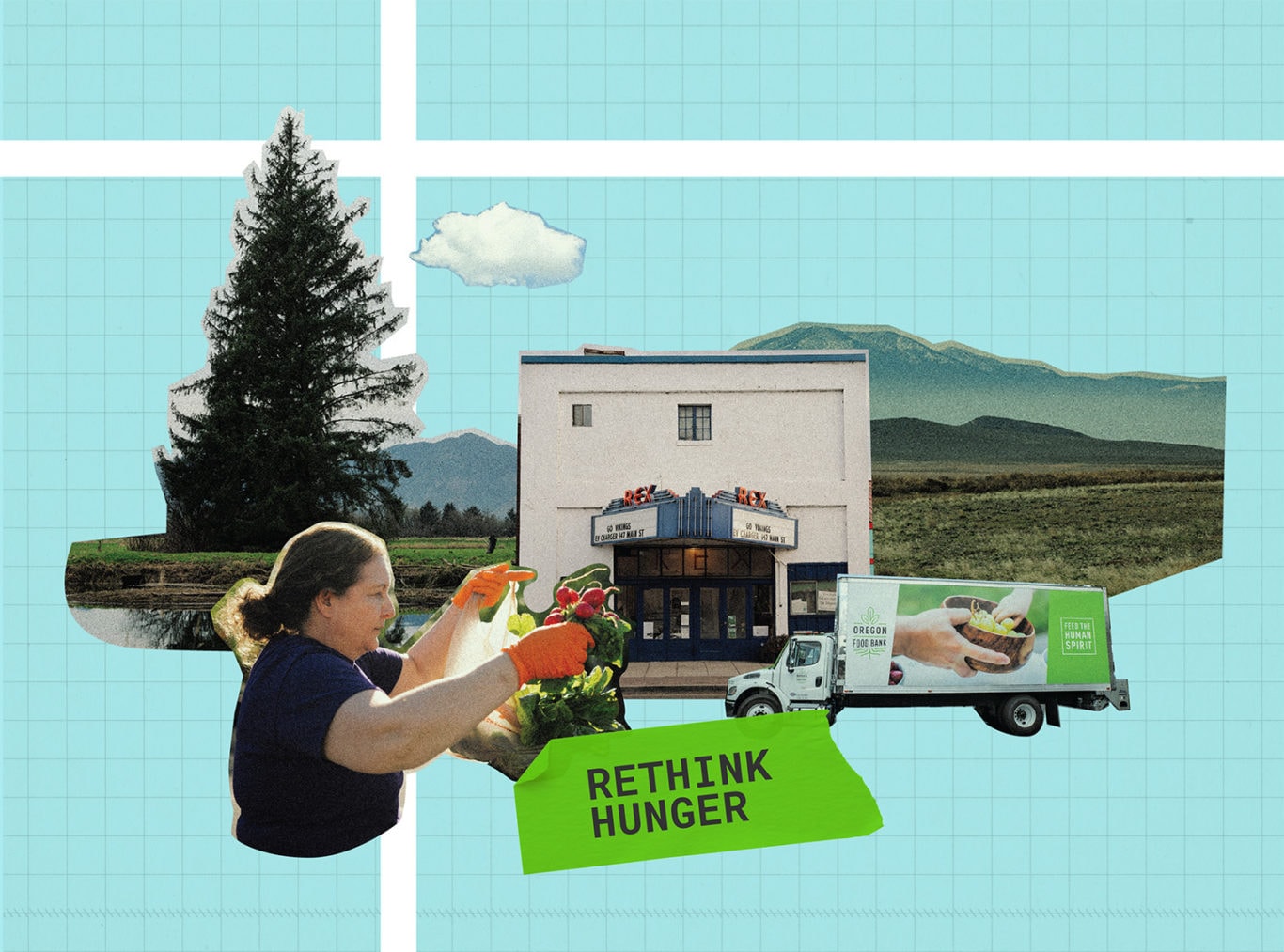
📍Sherman, Hood River and Wasco Counties

"Many folks in our community are living on the edge, paycheck to paycheck. They’re able to stay stable, but if something happens in their life, like a climate disaster or a wildfire, things can go downhill pretty quickly, so being able to be prepared to support those families as much as we can is an important priority we have."

–Breen Goodwin, Executive Director of Columbia Gorge Food Bank

ADVOCATE

Hunger is everywhere in Oregon.

Across our state, 1 in 7 people and 1 in 6 children are at risk of going hungry. This is about more than food – it’s a result of policy decisions that make it harder for people to get by.

This September is Hunger Action Month, a time when people across the country join together to help end hunger.

We’re taking action to address the root causes of hunger and advocate for solutions that work for all Oregonians, from Tillamook to Ontario.

What hunger looks like across Oregon

Hunger happens in all corners of our state, in rural, urban and suburban communities. Even if it impacts each of us differently, hunger connects us.

When we don’t have enough to make ends meet, we’re forced to make impossible decisions like choosing between buying groceries or medicine. Food insecurity shows up in everyday moments like stretching groceries, skipping meals, or wondering whether there will be enough.

Hunger is a policy choice — no matter where you live in Oregon

Oregon has an abundance of food – more than enough to feed all of us.

Hunger doesn’t come from a lack of food or personal failure.

It’s the result of policy choices about jobs, wages, housing, healthcare and where resources go.

📍Umatilla County

"I’m from Eastern Oregon, and I’ve seen how hunger shows up quietly, in skipped meals and hard choices. Hunger is a policy choice. What happens in Salem matters to families across the state, and the decisions lawmakers make determine who gets to eat and who doesn’t."

–Adrienne Sampson, a member of Oregon Food Bank’s Policy Leadership Council

Oregonians’ budgets are stretched thin, as the cost of living continues to climb faster than wages.

  • Rent prices rise faster than wages: From 2024 to 2025, the minimum wage in Oregon increased by about 2% while state law allowed rent prices to increase by up to 10%.

  • Healthcare costs keep climbing: Oregonians are spending more than $9,000 per person on healthcare each year — 40% more than in 2015.

  • Parents stretch paychecks to cover child care: The average annual cost of infant care in Oregon is more than 50% higher than in-state college tuition.

  • The wealth gap is widening: The wealthiest 10% of Oregonians own more than 75% of wealth in the state.

At the same time, the federal administration is cutting vital food assistance that Oregonians rely on to put food on the table. Last year, Congress made the biggest cut to SNAP (formerly known as food stamps) in history.

Over 70,000 Oregonians are now at risk of losing the food assistance they rely on. No matter where we stand politically, these choices shape whether families have enough to eat.

With rising costs and fewer resources, it’s no wonder that hunger is at record levels across our state.

In just two years, visits to the Oregon Food Bank Network rose 51%, reaching a record 2.9 million visits last year.

Together, we’re advocating for solutions to hunger that reach every corner of Oregon

Together with our network of food assistance sites, we help make sure everyone has nourishing food that feels like home, and we work with communities across the state to shape the laws and policies that will end hunger for good.

Last year, the Oregon Food Bank Network distributed over 98 million meals. Our Network is made up of 21 regional food banks partnering with more than 1,200 free food markets, pantries, meal sites and delivery programs. Many locations are shopping-style markets that allow families to select food that matches cultural and dietary needs.

We also know we can’t end hunger with food alone.

Our Network can serve everyone in line at a meal site or pantry today, but if we don’t address big issues like unaffordable housing, low wages, health care costs and barriers to SNAP, those lines will still be there tomorrow.

That’s why we’re committed to tackling the root causes of hunger through statewide action.

If we rethink hunger together, we can ensure everyone has enough to eat today and end hunger for good… because no one should be hungry.

How to get involved this Hunger Action Month 2026 in Oregon:

  • Attend an event: Events are happening all across the state that build momentum for the movement to end hunger.

  • Donate: Your gift can keep food flowing to families across Oregon.

  • Share on social media: Spread the word about Hunger Action Month and encourage your friends and neighbors to take action on social media.

  • Volunteer: Sign up for a volunteer shift to support access to food that feels like home.

This Hunger Action Month, join people across Oregon to advocate for policies that work for everyone, no matter where we live.

Together, we can create a future free from hunger.

Learn more about how to take action.

Related posts

Hunger Action Month

Bound Together: A Community Book Club to End Hunger

Hunger Action Month

The Table We Make: Host a Dinner for Hunger Action Month

Email sign-up

Stay connected

Sign up to receive emails with updates, resources and ways to get involved.